How it works
It reads what you hand over and ties every date, amount and exact word to its file. From that record it builds your documents. You confirm them and send them — in your name, with a person beside you.
Nothing uploaded.
The three steps
01Run the check
free
- Six answers scored in your browser
- Compared against seven documented patterns
- Nothing sent anywhere, nothing stored
02Hand over what you have
$195, once
- The AI reads the screenshots
- Dates, amounts and quoted messages extracted
- You correct it — your correction wins
03Send the pack in your name
sent by you
- Your documents built from the confirmed record
- The AI drops any sentence not in your evidence
- I read it before you do
Three steps, at your own pace. The AI does the first two; the third you carry out yourself, in your name.
Free · two minutes
Run the check
Six questions about what you paid for and what you were told. Nothing uploaded, nothing kept — it all runs in your browser.
- The pattern your answers matched, named and defined
- The score, with every weight behind it published
- Your letter to the platform, written and free
$195, once
Hand over what you have
Screenshots, exports, receipts — in whatever order they exist, sent to your case in Telegram. The AI pulls out the dates, amounts and exact messages that match a pattern, each tied to its file. You correct it, and your correction wins.
- A record of the facts, confirmed by you before anything is written
- An evidence index a dispute department can follow
- Any gap named while there is still time to fill it
Sent by you
Send the pack in your name
The bank filing with the right reason codes, the evidence index and chronology, and an instruction for your bank. The instruction says which number to call, what to say, which file is which. You read it all and send it in your name.
- An instruction for your bank, not a generic guide
- One state at a time, so you always know where the case stands
- The money back to you if nothing comes back in two weeks
The method was not designed in a workshop. It was run by hand, three times, until each case closed. The AI wrote the documents, whatever came back went in, the next set came out.
Two of those claims came back closed in the cardholder’s favour — $254.37 and $810.53. The platform’s own refund desk returned $305.97 across five accounts. $1,370.87 in total, and all three are in the cards.
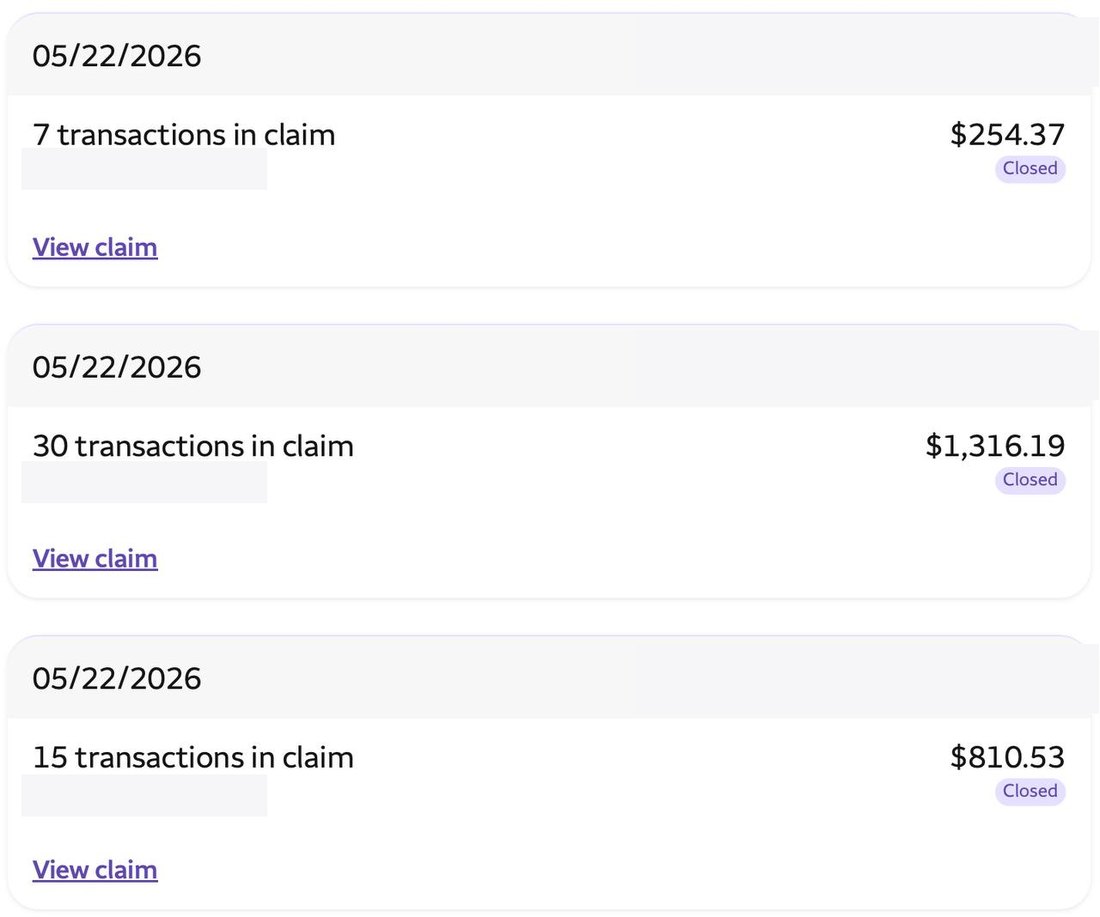
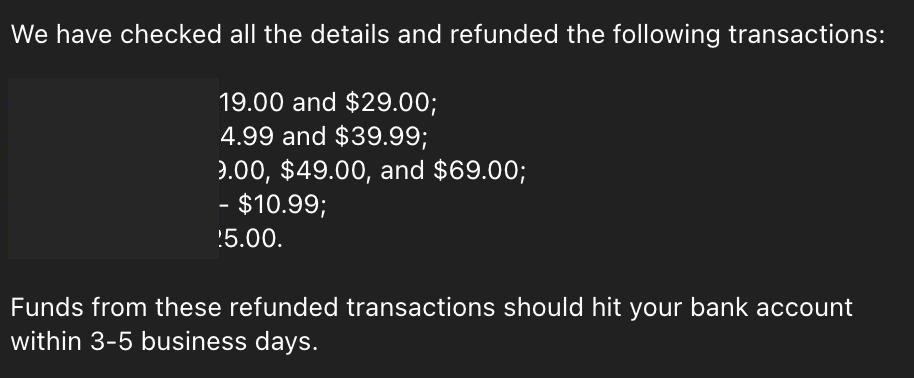
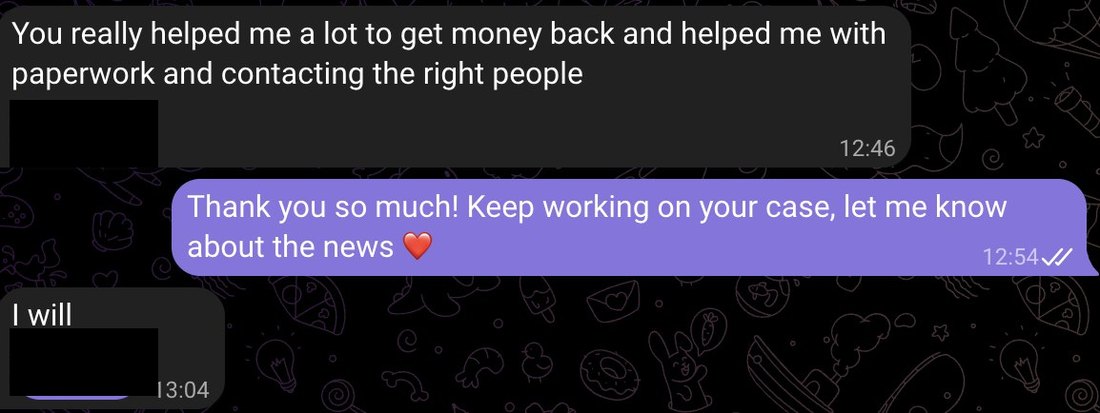
The outcomes, as the bank shows them. · Five cards. Open them.
Where a person still stands
The AI builds your documents from your answers and they reach you within minutes. A person is one tap away at every step, answers when you write, and takes over any case shaped unlike the ones before — in full.
What “it learns from every case” means
Weights are recalibrated against outcomes, in the published model, through a change log. Templates are tested against whether the bank engaged. A new pattern is proposed when five independent cases share a shape the library lacks — and a person decides.
The AI is never trained on your evidence. The loop runs on anonymized outcomes, under a checkbox you can decline while keeping everything you paid for.